CD30, also known as TNFRSF8 (TNF receptor superfamily member 8), is a cell membrane protein of the tumor necrosis factor receptor family and a tumor marker for anaplastic large cell lymphoma.
Function
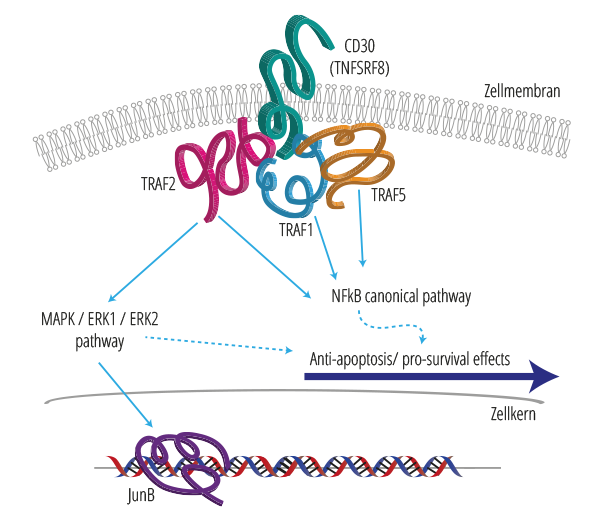
This receptor is expressed by activated, but not by resting, T and B cells. TRAF2 and TRAF5 can interact with this receptor, and mediate the signal transduction that leads to the activation of NF-kappaB. It is a positive regulator of apoptosis, and also has been shown to limit the proliferative potential of autoreactive CD8 effector T cells and protect the body against autoimmunity. Two alternatively spliced transcript variants of this gene encoding distinct isoforms have been reported.
Clinical significance
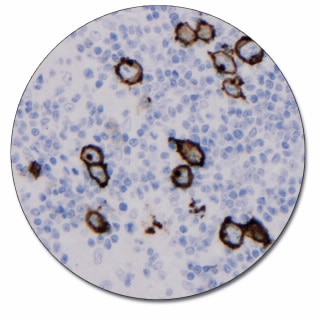
CD30 is associated with anaplastic large cell lymphoma. It is expressed in embryonal carcinoma but not in seminoma and is thus a useful marker in distinguishing between these germ cell tumors. CD30 and CD15 are also expressed on Reed-Sternberg cells typical for Hodgkin's lymphoma.
Cancer treatment
CD30 is the target of the FDA approved therapeutic brentuximab vedotin (Adcetris). It is approved for use in:
- Hodgkin lymphoma (HL) (brentuximab vedotin) after failure of autologous stem cell transplant (ASCT)
- HL in patients who are not ASCT candidates after failure of at least 2 multiagent chemotherapy regimens
- Systemic anaplastic large cell lymphoma (sALCL) after failure of at least 1 multiagent chemotherapy regimen
- Primary cutaneous anaplastic large cell lymphoma (pcALCL) or CD30-expressing mycosis fungoides (MF) who have received prior systemic therapy
- Various types of CD30-positive T cell lymphomas
Brentuximab vedotin is also currently being studied in and recommended for treating:
- Various types of CD30-positive B cell lymphomas
- CD30-positive cases of the NK cell lymphoma, extranodal NK/T-cell lymphoma, nasal type
Interactions
CD30 has been shown to interact with TRAF5, and TRAF2.
References
Further reading
External links
- CD30 Antigens at the U.S. National Library of Medicine Medical Subject Headings (MeSH)
- Human TNFRSF8 genome location and TNFRSF8 gene details page in the UCSC Genome Browser.
This article incorporates text from the United States National Library of Medicine, which is in the public domain.